


All Purpose Fillers
Creating a flawless, chemically stable base before painting or priming requires a compound that accommodates the natural movement of your substrate.
Industrial surface repair demands compounding materials that exhibit exceptional structural adhesion without shrinking, cracking, or crumbling away over time and that is why here we can offer you a range of primers to help you.
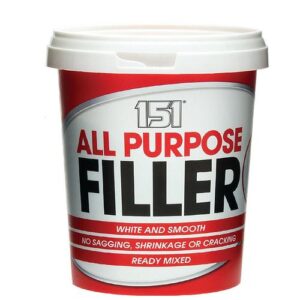
All Purpose Fillers Explored
Creating a flawless, chemically stable base before painting or priming requires a compound that accommodates the natural movement of your substrate.
Industrial surface repair demands compounding materials that exhibit exceptional structural adhesion without shrinking, cracking, or crumbling away over time.
Selecting the correct filling compound ensures that deep gouges, structural cracks, and rough joints become completely invisible beneath subsequent decorative finishes.
To find the perfect smoothing or repair solution for your next trade project, browse our comprehensive selection of high-performance all purpose fillers built for professional decorators.
Why does the rate of compound shrinkage determine the long-term success of a surface repair?
As standard water-based filling compounds dry, the evaporation of moisture causes the volume of the material to contract significantly.
This volume reduction creates concave depressions across the repair zone, forcing trade professionals to apply multiple tedious structural layers.
Opting for premium fillers formulated with advanced acrylic polymers minimises this shrinkage, allowing you to fill deep voids in a single application.
For instance, these specialised formulas maintain their density during the curing process, keeping the repaired surface perfectly flush with the surrounding wall.
How does the flexibility of an all purpose filler protect joints against cyclical thermal expansion?
Buildings naturally shift, expand, and contract due to seasonal temperature changes and structural settling forces.
Rigid, brittle filling materials cannot cope with this subtle movement, which quickly causes the repaired joint to hairline crack and fail.
So what should you consider here?
Using a flexible, polymer-enriched compound allows the filler to stretch and compress in harmony with the surrounding timber or plasterboard.
This elastic property guarantees a permanent, crack-free repair that entirely eliminates the need for frequent, costly maintenance call-outs.
What causes flash rusting when standard fillers are applied directly over exposed metal fixings?
The high water content found in traditional plaster or masonry fillers triggers immediate chemical oxidation when placed on bare steel screw heads.
This rapid oxidation produces iron oxide, which bleeds through the wet filler and creates unsightly orange rust stains on your finished paintwork.
Utilising a high-quality, corrosion-resistant filler creates an immediate protective barrier that blocks moisture from interacting with the metal fixing.
This chemical protection completely prevents staining, ensuring your pristine white ceilings and timber trim remain immaculate for years.
How to Choose the Perfect All Purpose Fillers?
Selecting the ideal filler involves matching the compound composition to the specific porosity and environmental exposure of your substrate.
A mismatched compound can lead to poor adhesion, delayed drying times, or complete product failure if exposed to external weathering elements.
You must carefully evaluate whether your specific application requires a rapid-drying interior paste or a robust, weather-resistant exterior compound.
Balancing excellent sandability with strong structural adhesion will fundamentally upgrade the standard of your final decorating finishes.
Variations & Types
Ready-Mixed Acrylic Fillers
Ready-mixed compounds are pre-blended to a perfectly smooth consistency, entirely eliminating the dust and mess of manual workshop mixing.
These user-friendly pastes offer exceptional slump resistance, allowing you to fill vertical wall cracks and deep ceiling holes without the product sagging.
They are the premier choice for quick-turnaround maintenance tasks, providing excellent trowel workability and rapid adhesion to plaster, stone, and wood.
Flexible Acrylic Sealants & Caulks
Supplied in convenient cartridges for cartridge gun application, these flexible fillers are designed specifically for sealing internal perimeter joints.
They excel at closing the gaps between skirting boards, door architraves, window frames, and plaster walls where movement is highly likely.
Once fully cured, the smooth acrylic surface can be directly overpainted with emulsion or gloss paint without any risk of paint cracking.
Heavy-Duty Exterior Masonry Fillers
Engineered with hydrophobic polymers, exterior-grade fillers are formulated to withstand freezing temperatures, driving rain, and intense ultraviolet radiation.
These robust compounds bond tenaciously to challenging outdoor surfaces like concrete, rough brickwork, rendering, and exterior woodwork trims.
The cured material forms an unyielding, water-resistant seal that stops frost damage from widening existing structural cracks over winter.
Specialist Considerations
Substrate Porosity and Moisture Absorption
Highly porous materials like dry plaster and old masonry rapidly suck moisture out of freshly applied water-based filling compounds.
This premature dehydration stops the filler from curing correctly, making the final repair weak, chalky, and highly prone to crumbling.
In these challenging scenarios, priming the cavity with a stabilising solution ensures the filler retains its moisture and cures to full strength.
Sanding Efficiency and Grain Structure
A high-quality filler must feather down to a perfectly invisible, razor-sharp edge when rubbed down with industrial abrasive paper.
Cheaper compounds contain coarse, irregular filler aggregates that clog your sanding discs and leave deep scratches behind on the surface.
Choosing ultra-fine grain formulas allows you to achieve a glass-smooth finish that reflects light evenly across the painted repair patch.
Paint Compatibility and Blister Protection
Certain heavy-duty solvent fillers contain migrating chemical plasticisers that react negatively with standard water-based wall emulsions.
This chemical incompatibility causes the subsequent paint film to blister, peel away, or undergo severe discolouration over time.
Ensuring your chosen repair compound is fully paint-compatible guarantees a chemically inert surface that accepts all standard modern paint finishes.
Quality & Brand Selection
Sourcing premium trade compounds from trusted brands like Bond It and Soudal ensures your surface preparation survives the test of time.
Professional-grade fillers are formulated with high-quality resins, ensuring they do not shrink back weeks after your painting project is completed.
For an flawless, durable finish across all your residential or commercial projects, explore our professional collection of all purpose fillers today.