


Hose Pipe Tubing
Commercial fluid transfer processes demand specialised tubing that can withstand constant physical flexing without kink failures, internal constriction, or wall tearing.
That is where our range of hose pip tubings come in to play.
Hose Pipe Tubing Explored
Maintaining continuous fluid dynamics in industrial and workshop environments requires a conduit that balances extreme flexibility with high pressure containment.
Commercial fluid transfer processes demand specialised tubing that can withstand constant physical flexing without kink failures, internal constriction, or wall tearing.
Selecting the correct flexible pipeline ensures that your air, water, or chemical delivery lines remain completely stable under structural pressures and sudden surges.
To find the ideal fluid or pneumatic routing solution for your next project, explore our full trade range of heavy-duty hose pipe tubing engineered for demanding industrial tasks.
How does the reinforcement matrix of a hose affect its burst pressure rating?
The base polymer of a standard hose provides flexible containment, but it lacks the structural tensile strength to resist expanding under high hydraulic or pneumatic forces.
Without support, intense pressure causes the raw plastic walls to balloon outwards, leading to sudden material thinning and catastrophic rupture.
Integrating a high-tensile braided textile matrix between the inner and outer layers resolves this vulnerability.
This intricate woven core evenly distributes internal radial forces along the length of the tubing, allowing it to sustain heavy pressures without losing its shape.
Why is plasticiser migration a critical factor in the breakdown of flexible tubing?
Flexible PVC hoses rely on specialized chemical plasticisers blended into the polymer matrix to give the material its rubbery elasticity.
Over time, exposure to harsh fluids, constant friction, and thermal cycling causes these plasticiser molecules to leach out of the hose walls.
So what should you consider here?
As the plasticisers disappear, the tubing naturally loses its pliable nature, becoming brittle, rigid, and highly susceptible to stress cracking when bent.
Opting for high-grade, stabilized polymer formulations stops this chemical migration, ensuring the line stays perfectly supple throughout its operational lifespan.
What causes internal fluid contamination within standard workshop lines?
When low-quality hoses are exposed to constant stagnant water and warmth, the internal bore becomes a breeding ground for biofilm and microbial tracking.
This organic buildup detaches during high-velocity fluid transfers, clogging downstream spray nozzles, fine valves, and precision tools.
Utilizing specialized tubing with ultra-smooth, chemically inert inner linings prevents particulates and bacteria from anchoring to the sidewalls.
This ensures a crystal-clear, laminar fluid flow, safeguarding your pneumatic systems and finishing equipment from expensive blockage damage.
How to Choose the Perfect Hose Pipe Tubing?
Selecting the right hose line requires matching the polymer composition and bore dimensions to your specific working environment and fittings.
An incorrect pairing can lead to rapid material degradation, leaking coupling joins, or sudden pressure drops that ruin tool performance.
You must carefully balance the chemical makeup of the fluid being transferred against the temperature fluctuations of your workspace.
Understanding the exact relationship between hose wall thickness and minimum bend radius will completely transform your fluid management efficiency.
Variations & Types
Reinforced PVC Braided Hoses
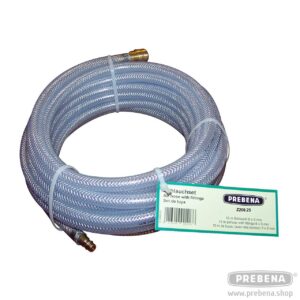
Engineered for versatility, braided PVC hoses feature an open-mesh polyester reinforcement that offers excellent pressure handling and full visual flow monitoring.
The glass-clear walls allow workshop operators to instantly spot airborne bubbles, fluid discoloration, or blockages moving through the line.
They are the premier choice for factory air lines, light chemical routing, and general workshop water delivery systems.
Unreinforced Flexible Tubing
Designed for low-pressure applications, gravity feeds, and micro-fluidic routing, unreinforced tubing offers maximum flexibility in tight enclosures.
Without a bulky fabric core, these lines can navigate incredibly tight bends and complex routing channels without collapsing or crimping.
They are highly popular for laboratory drainage, protective sleeving, and simple fluid overflow lines where pressure is non-existent.
Heavy-Duty Pneumatic Air Lines
Built specifically to survive the abrasive environment of garage floors and construction sites, these hoses possess extreme external wear resistance.
The thick outer skin resists punctures from sharp workshop debris, oil tracking, and being accidentally crushed by heavy vehicles.
They maintain a dependable, high-velocity air stream to sustain your pneumatic staplers, nailers, and impact wrenches without dropping pressure.
Specialist Considerations
Chemical Compatibility and Polymer Breakdown
Passing aggressive solvents, oils, or fuel mixtures through standard utility hoses can cause the plastic to dissolve, swell, or turn gummy.
This structural melting destroys the burst resistance of the hose and ruins downstream equipment with dissolved plastic polymers.
Always verify the chemical resistance chart of your tubing material to guarantee it can safely handle your specific industrial compounds.
Environmental Weatherproofing and Thermal Stability
Sub-zero winter temperatures cause standard plastics to freeze and harden, making them highly brittle and prone to snapping during handling.
Conversely, extreme summer heat softens the polymer walls, drastically lowering the maximum safe working pressure of the line.
For instance…
Choosing a wide-temperature compound ensures the hose stays flexible in the freezing cold and structurally sound under high heat.
Kink Resistance and Bend Radius Calculation
Forcing a flexible hose around a corner that is sharper than its rated minimum bend radius triggers an instant structural kink.
This kink cuts off the downstream fluid supply, spikes the pressure behind the blockage, and strains your pumping machinery.
Selecting heavy-walled or spirally-reinforced tubing prevents these sudden collapses, ensuring uninterrupted flow across complex layouts.
Quality & Brand Selection
Sourcing premium-grade hoses ensures your fluid systems operate safely without sudden line blowouts or costly workshop flooding.
Professional-grade lines maintain their flexibility and shape through years of dragging, twisting, and heavy daily usage.
To upgrade your workshop infrastructure with dependable fluid routing, explore our complete trade collection of hose pipe tubing today.