


Flashing Butyl Tapes
Create an instant, impenetrable barrier against moisture and weather with our professional range of flashing butyl tapes. Engineered for extreme durability, butyl rubber adhesive provides a permanent, airtight seal that remains highly flexible across a wide temperature range. Unlike standard bitumen flashing, premium butyl tape does not dry out, crack or degrade over time, making it the ultimate choice for critical structural waterproofing.
These self adhesive flashing tapes are perfect for sealing roofing joints, repairing leaking gutters, patching valleys and wrapping deck joists to prevent wood rot. They offer exceptional primerless adhesion to a vast array of building materials, including masonry, metal, timber, glass and roofing felt. Whether you are handling emergency building repairs on site or working on a long term DIY home project, our selection ensures complete protection against driving rain and damp. Explore our range below to find the perfect width for your job.
Showing all 3 resultsSorted by popularity
-

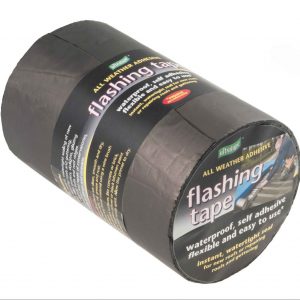
Bond It Flashing Tape, Waterproof Self-Adhesive Bitumen Seal for Roof, Gutter & Chimney Repair – Durable Lead Grey Finish
From: £4.27 Inc. VAT Select options This product has multiple variants. The options may be chosen on the product page -

Ultratape Self-Adhesive Flashing Tape 10m | Bitumen & Aluminium Sealant for Waterproofing Gutters, Roofs & Windows, Can be Painted Over
From: £10.82 Inc. VAT Select options This product has multiple variants. The options may be chosen on the product page -
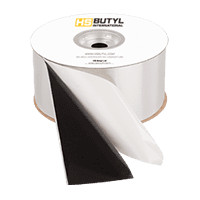
HS Foilband 0316 Lead Butyl Tape (Various Sizes) | Waterproof Sealant for Roofing, Glazing, Metal Flashings & Joints | NFRC Certified, 12-Year Warranty
From: £28.80 Inc. VAT Select options This product has multiple variants. The options may be chosen on the product page
Flashing Butyl Tapes Explored
Achieving a completely weather-resistant, permanent seal on structural joints requires an adhesive barrier that combines absolute water resistance with long-term flexibility.
Modern roofing, window installations, and commercial construction projects demand heavy-duty sealing materials that can bridge structural gaps without drying out or cracking.
Selecting the correct self-adhesive flashing roll ensures that water, wind, and ambient moisture cannot penetrate critical building envelopes, safeguarding properties from structural decay.
To secure your next outdoor project with an impenetrable moisture barrier, explore our extensive trade selection of premium flashing butyl tapes built for roofing and construction professionals.
Why does the cold-flow property of butyl rubber ensure a superior seal over traditional bitumen?
Butyl rubber possesses an innate molecular flexibility that allows it to behave as a viscoelastic solid, meaning it constantly undergoes a slow, self-healing process known as cold flow.
When applied to a rough, uneven substrate, the compound gradually creeps and flows into the tiny microscopic cracks and valleys of the material over time.
Traditional bitumen-based flashing tapes lack this fluid adaptability; they dry out, harden, and form microscopic air gaps that allow capillary water path tracking.
So what should you consider here?
Butyl rubber retains its sticky, gel-like state indefinitely, ensuring it actively seals around penetrating roofing nails, screws, and building fixings without tearing.
How do structural expansion cycles cause rigid flashing systems to crack and peel?
Building materials like aluminium, zinc, and masonry expand and contract at completely different rates when exposed to changing seasonal temperatures.
If a flashing tape lacks exceptional elongation memory, these continuous, aggressive micro-movements place immense physical shear stress on the adhesive bond line.
Rigid systems or low-grade tapes quickly reach their tensile limits, causing the flashing layer to fracture cleanly or delaminate from the wall face.
For instance…
Professional butyl tapes feature an elongation capacity often exceeding three hundred per cent, allowing the rubber mass to stretch and compress in perfect harmony with the building.
What causes adhesive ghosting and edge lifting on porous brickwork during hot weather?
Extended exposure to high summer heat can cause low-purity adhesive compounds to break down chemically, losing their internal cohesive strength.
When the sun bakes the installation, the sticky mass thins out dramatically and begins to bleed or ooze out from behind its protective foil backing sheet.
As the compound melts, it stains porous masonry, leaving behind an ugly, greasy residue while causing the outer tape edges to curl and lift away from the joint.
Utilising high-purity, cross-linked butyl formulations entirely eliminates this thermal migration.
The rubber matrix stays completely stable up to ninety degrees Celsius, ensuring the flashing remains perfectly square, flat, and securely anchored to the brickwork.
How to Choose the Perfect Flashing Butyl Tapes?
Selecting the ultimate waterproofing roll involves precisely matching the protective outer backing material to the exact chemical exposure of your building envelope.
An incorrect choice can result in punctured membranes, dissolved rubber compounds, or a weak boundary seal that fails during intense downpours.
You must carefully calculate the surface profile of your workspace, checking whether you need a highly malleable dead-soft foil or a heavy double-sided bonding strip.
Balancing high initial tack with long-term resistance to ultraviolet rays will completely transform your roofing reliability and external building protection.
Variations & Types
Aluminium Foil Faced Flashing Tapes
Foil-faced flashing tapes feature a thick layer of high-purity butyl rubber permanently bonded to a tough, weather-proof aluminium or lead-look backing sheet.
The metallic outer layer reflects solar radiation and provides full physical defense against falling debris, bird pecking, and severe foot traffic during roof maintenance.
They are the premier choice for repairing cracked valley gutters, sealing chimney stacks, and patching leaks on corrugated metal factory roofs.
Double-Sided Butyl Sealing Strips
Double-sided butyl formulations consist of a pure, unsupported ribbon of sticky rubber compound protected on both sides by a removable release liner.
These flexible, tape-like gaskets are designed to be sandwiched directly between two overlapping sheet materials, creating an invisible, highly compressed moisture seal.
They excel at sealing lap joints in metal cladding, fixing conservatory roof panels, and waterproofing internal damp-proof membranes before flooring installation.
Fleece Backed Render Flashing Tapes
Fleece-backed rolls combine an aggressive butyl adhesive bed with a soft, non-woven synthetic fabric layer that acts as a highly receptive plaster bonding key.
Once the tape is pressed over a window frame or brick aperture, masonry sand-cement renders and acrylic plasters can be applied directly onto the fabric face.
This specialist configuration allows decorators and builders to create a completely seamless, hidden waterproofing layer around external doors and facade joints.
Specialist Considerations
Substrate Porosity and Acrylic Priming Protocols
Applying flashing tapes directly onto dusty concrete, raw plaster, or weathered timber blocks the adhesive from making full molecular contact with the solid wall.
The dry, crumbly particles coat the fresh rubber compound instantly, turning the tacky surface non-adhesive and leading to premature edge lifting.
Brushing a liquid primer over porous masonry seals loose debris and creates a stable, high-surface-energy foundation that accepts butyl tapes flawlessly.
Extreme Winter Installations and Sub-Zero Temperature Dynamics
When atmospheric temperatures drop toward freezing point, standard pressure-sensitive adhesives experience a glass transition, turning hard and losing their initial tack.
Attempting to install a standard flashing roll onto a freezing metal roof sheet results in a weak contact bond that detaches during the first winter gale.
Specifying all-weather cold-application butyl formulas ensures the rubber stays soft, sticky, and completely workable down to minus ten degrees Celsius.
Chemical Compatibility and Solvent Sensitivity Risks
Butyl rubber is highly sensitive to organic solvents, mineral oils, and aggressive petroleum-based compounds, which can dissolve the elastomer chains completely.
Exposing a freshly flashed roofing joint to liquid solvent cleaners or uncured chemical sealants will turn the tough rubber into a runny, non-sticky sludge.
Verifying full product compatibility charts guarantees your waterproof joints stay safe from chemical breakdown when working alongside modern roofing sealants.
Quality & Brand Selection
Sourcing your structural waterproofing consumables from trusted industry names ensures your building projects avoid costly water damage claims and premature structural maintenance.
Premium flashing tapes are manufactured to exceptionally tight thickness tolerances, ensuring identical rubber distribution, clean release liner removal, and smooth unwind speeds.
Investing in trade-tier hardware keeps your building envelopes airtight and fully protected against driving rain, freezing frost cycles, and intense solar exposure.
For an uncompromised, weather-proof finish across all your roofing and construction tasks, explore our comprehensive commercial collection of flashing butyl tapes today.