


Adhesive Transfer Tapes
Achieve an incredibly low profile, invisible bond with our premium selection of professional adhesive transfer tapes. Unlike standard double-sided tapes that feature a paper or plastic carrier fabric in the middle, transfer tapes consist of a pure layer of high-performance acrylic adhesive coated directly onto a removable release liner. This coreless design allows the glue layer to conform perfectly to your working surfaces, providing a flush, weightless hold that will not add any bulk to your joints.
These technical bonding strips offer exceptional clarity, high initial tack and superb resistance to UV light and temperature fluctuations. They are highly effective for laminating foams, mounting graphic overlays, securing nameplates, and assembling point-of-sale displays. Whether you are applying them by hand or using a compatible tape gun dispenser for rapid assembly line work, our transfer tapes deliver an ultra-clean alternative to liquid adhesives. Browse our complete range of widths below to find the ideal thickness for your trade or DIY project.
Showing all 2 resultsSorted by popularity
-

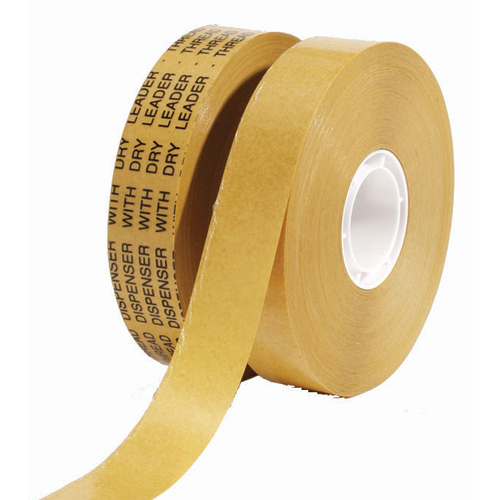
ATG Double Sided Transfer Tape 12mm | High-Tack Acrylic Adhesive for POS, Mounting, Printed Board Joining & Envelope Manufacturing
From: £2.18 Inc. VAT Select options This product has multiple variants. The options may be chosen on the product page -
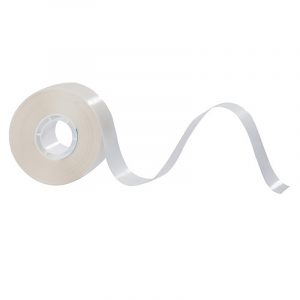
12mm x 33m High Tack ATG Premium Grade Transfer Tape | Acid-Free Acrylic Adhesive for Picture Framing, Scrapbooking & POS Mounting | High Strength
£3.69 Inc. VAT Add to basket
Adhesive Transfer Tapes Explored
Achieving a completely invisible, low-profile bond across flat surfaces requires a fastening system that entirely eliminates the bulk of standard tape carriers.
Industrial product assembly, graphic laminating, and membrane switch fabrication lines demand unsupported adhesive films that conform perfectly to intricate parts.
Selecting the correct high-performance transfer resin ensures that your substrates remain flush, perfectly flat, and completely free from edge-lifting or bubbling.
To discover the ultimate flush bonding solution for your next project, explore our extensive trade range of professional adhesive transfer tapes engineered for demanding trade environments.
Why does the lack of an internal carrier layer improve tape conformance on curved surfaces?
Standard double-sided tapes feature a central stabilizing carrier, such as polyester film, tissue paper, or PVC foam, which has its own natural structural stiffness.
When you attempt to wrap these multi-layered tapes around sharp radii or complex three-dimensional contours, the carrier resists the dimensional change.
This internal physical resistance creates continuous outward spring pressure, forcing the tape to lift away from the valleys over time.
So what should you consider here?
An adhesive transfer tape consists of a pure layer of unsupported, free-flowing sticky polymer wound directly onto a slippery release liner.
Because there is no rigid backing inside the cured joint, the fluid adhesive deforms effortlessly to mirror microscopic surface variations, ensuring total contact without stress.
How does solvent entrapment during high-speed lamination trigger hidden bond fracturing?
When transfer tapes are manufactured, the active polymers are typically dissolved in liquid solvent carriers before being coated onto the release paper.
If these chemical solvents are not allowed to flash off completely in the factory drying ovens, microscopic traces stay trapped within the wound roll.
Applying this green tape under heavy pressure traps the volatile chemical molecules between two completely non-porous substrates like sheet metals.
For instance…
As ambient workshop temperatures rise, the trapped solvents expand into pockets of gas, forming blisters that separate the adhesive from the material face.
Utilising fully cross-linked, advanced acrylic transfer sheets guarantees that the polymer matrix is completely dry, preventing sudden outgassing failures.
What causes adhesive adhesive migration or oozing during high-pressure metal die-cutting?
Oozing happens when the internal cohesive strength of an unsupported transfer glue is lower than the physical cutting forces applied by machinery.
When a heavy industrial stamping die punches down onto a taped sheet, the intense edge pressure forces the soft polymer to flow sideways.
This sticky displacement leaves a thick, gummy ridge of glue trailing along the cut lines, which instantly clogs up your premium manufacturing tools.
These messy strings also stick parts together inside storage crates, leading to torn liners and massive product wastage during manual assembly stages.
Upgrading to firm, high-shear acrylic transfer films with excellent structural cutoff characteristics ensures a razor-sharp finish without any edge bleed.
How to Choose the Perfect Adhesive Transfer Tapes?
Selecting the ideal transfer roll involves matching the exact coat weight and chemical base to the specific roughness of your chosen panel.
An incorrect choice can lead to sparse contact areas on textured plastics or chemical melting if applied to sensitive backing foams.
You must carefully balance the processing speed of your line, checking whether your tools require immediate rubber tack or a slow-curing acrylic flow.
Understanding how different thickness levels interact with engineered plastics and metals will completely transform your daily structural assembly output.
Variations & Types
General Purpose Acrylic Transfer Films
Acrylic transfer tapes are the versatile workhorses of the printing and sign industries, offering exceptional resistance to UV light and oxidation.
The clear polymer film flows progressively deeper into surface pores over twenty-four hours, achieving massive long-term peel and shear performance.
They are the premier choice for mounting graphic nameplates, laminating display plastics, and fixing metal trims where clarity is non-negotiable.
High-Tack Synthetic Rubber Rolls
Formulated for immediate grab, rubber-based transfer films stick tenaciously the exact millisecond they make contact with a substrate.
The soft, sticky resin bites immediately into difficult porous targets like recycled cardboards, lightweight paper stocks, and fibrous textiles.
They provide an exceptionally fast, economical solution for high-speed web splicing, print finishing, and envelope manufacturing lines.
Modified Low Surface Energy Adhesives
Built specifically for difficult engineered plastics, these advanced transfer webs are infused with unique tackifier resins.
The modified chemistry forces the adhesive to wet-out aggressively across smooth, non-porous synthetics that standard tapes naturally slide off.
They excel at bonding polypropylene dashboards, polyethylene foam gaskets, and powder-coated electronic cases where joint safety is mandatory.
Specialist Considerations
Flash-Off Windows and Chemical Priming Protocols
Applying thin transfer films directly onto low surface energy targets can result in a weak contact bond that detaches under minor physical load.
Brushing an advanced chemical primer over the substrate alters the surface energy profile completely before you lay down the sticky film.
This simple pre-treatment creates a highly receptive microscopic foundation, allowing the pure transfer adhesive to lock permanently onto the frame.
Liner Release Values and Reverse-Wound Application Machinery
Using transfer tapes inside handheld adhesive dispensing guns requires a specialized roll configuration known as a reverse-wound ATG tape.
The sticky film is wound with the adhesive layer facing outward on the roll, allowing the gun mechanism to scrape the clear liner away cleanly.
Verifying exact tool compatibility ensures the tape dispenses flat without bunching up, maximizing your kitting speeds without unexpected machinery jams.
Thermal Curing Environments and Bake-Cycle Tolerances
Industrial metal panels often undergo intensive post-assembly finishes, such as powder coating ovens that regularly exceed one hundred and eighty degrees.
Standard rubber or low-grade adhesive transfer lines will rapidly char, smoke, and completely lose their internal grip under this intense heat.
Specifying high-temperature thermosetting acrylic transfer sheets guarantees that your structural seams remain fully intact and completely unyielding through baking cycles.
Quality & Brand Selection
Sourcing professional-grade transfer consumables from world-class trade suppliers like 3M ensures consistent chemical composition and predictable bond lifespans.
Premium transfer tapes are manufactured to exceptionally tight micrometre tolerances, ensuring an identical adhesive thickness across the full length of the roll.
Investing in trade-tier rolls protects your production department from expensive joint field failures and costly post-assembly cleanup downtime.
For an uncompromised, structurally secure finish across all your manufacturing and laminating projects, browse our complete collection of adhesive transfer tapes today.