


Metal Glues & Adhesives
Create unbreakable joints and permanent bonds with our high performance range of metal glues and adhesives. Bonding metals like steel, aluminium, copper and brass requires heavy duty chemical formulations that can withstand high stress, vibration and temperature fluctuations. Our collection features industrial grade epoxies, structural acrylics and high strength superglues engineered specifically to secure smooth, non porous metallic surfaces.
These specialized metal adhesives offer a fantastic alternative to mechanical fixings, welding or riveting, eliminating the need to drill holes and risk weakening your materials. Whether you are conducting precision engineering in a workshop, repairing metalwork on a vehicle or tackling tough DIY assembly tasks at home, our formulas provide excellent gap filling properties and long lasting shear strength. Browse our full selection below to find the ideal cure time and strength for your metal bonding project.
Showing all 5 resultsSorted by popularity
-

Grabfast Clear Bio Spray Adhesive – 500ml Can, Eco-Friendly High-Tack Glue for Laminates, Fabrics & Foam, Fast-Drying & Low Odour Formula
£6.49 Inc. VAT Add to basket -

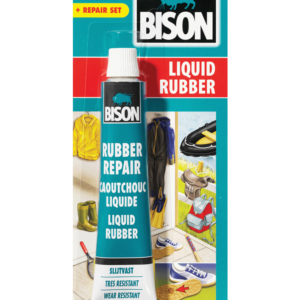
Liquid Rubber Sealant Tube 50ml | Multi-Purpose, Waterproof & Flexible Adhesive for Repairing Shoes, Tents, Neoprene, Metal & Ceramics
£10.78 Inc. VAT Add to basket -
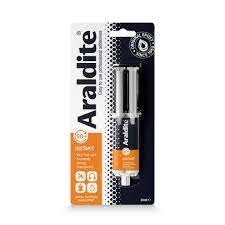
Araldite Instant 24ml Syringe Epoxy Adhesive | 90-Second Fast-Set High Performance Resin for Metal, Wood, Glass & Ceramics | Water & Oil Resistant
£7.99 Inc. VAT Add to basket -
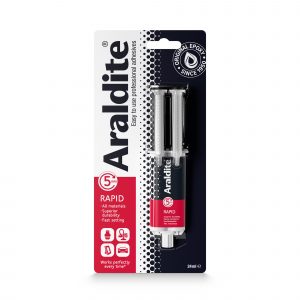
Araldite Rapid 24ml Syringe Epoxy Adhesive | 5-Minute Fast-Set High Performance Resin for Metal, Wood, Ceramics & Glass | Water & Chemical Resistant
£7.99 Inc. VAT Add to basket -
Gemini Polygrab 22ltr Contact Spray Adhesive | Professional Polystyrene & Foam Bonding
From: £175.00 Inc. VAT Select options This product has multiple variants. The options may be chosen on the product page
Metal Glues & Adhesives Explored
Creating an unbreakable structural bond on metallic surfaces requires an advanced chemical matrix that manages load distribution without warping the substrate.
Industrial metal assembly and commercial fabrication lines demand high-performance bonding agents that completely eliminate the need for heavy welding, rivets, or sheet screws.
Selecting the correct formulation ensures that your structural seams remain entirely flat, uniform, and completely free from thermal stress fractures.
To discover the ultimate chemical joining solutions for your engineering workshop, explore our complete selection of premium metal glues & adhesives engineered for professionals.
Why does surface passivation cause structural adhesive bonds on aluminium to fail?
Aluminium naturally reacts with atmospheric oxygen almost instantly, developing a transparent, highly stable surface layer known as aluminium oxide.
This microscopic passivation layer possesses an exceptionally low surface energy that rejects standard liquid glues, causing them to bead up.
If you apply a basic adhesive without treating this layer, the glue binds to the weak oxide skin rather than the solid metal base beneath.
So what should you consider here?
When the joint experiences physical tension, the brittle oxide layer shears off completely, leading to a catastrophic boundary bond failure.
Utilising advanced structural acrylics or specialized epoxy formulations chemically alters this oxide interface to guarantee deep molecular cross-linking.
How does galvanic corrosion degrade the integrity of a bonded multi-metal assembly?
When two structurally dissimilar metals — such as steel and aluminium — make direct physical contact in the presence of atmospheric moisture, an electrochemical cell is created.
Electrons flow naturally from the more active metal to the noble metal, causing the active substrate to corrode, flake, and weaken at an alarming rate.
Standard mechanical fasteners often accelerate this destructive electrical tracking by piercing right through both metal sheets.
For instance…
Using a thick, high-dielectric structural adhesive creates a permanent insulating barrier that isolates the two electrical potentials completely.
This chemical barrier blocks galvanic electron transfer entirely, keeping your multi-material metal joins structurally sound and rust-free for decades.
What triggers thermal shock fractures in cured metal glues during cyclical temperature swings?
Metals like copper, brass, and steel possess incredibly high thermal conductivity and expand rapidly when exposed to heat sources.
If a cured metal adhesive is overly rigid and lacks internal elasticity, it cannot adapt to these sudden dimensional movements.
As the metal substrates expand and contract at different speeds, immense internal shear forces concentrate along the rigid bond line.
This localized stress leads to immediate brittle fracturing, causing the adhesive seam to snap clean apart without warning.
Opting for rubber-toughened epoxies or elastomeric structural adhesives resolves this physical vulnerability by absorbing thermal expansion movements flawlessly.
How to Choose the Perfect Metal Glues & Adhesives?
Selecting the ideal liquid compound involves precisely matching the chemical curing mechanism to the exact environmental conditions of your workshop.
A mismatch between your adhesive open time and assembly speed can lead to premature skinning, trapping weak air pockets inside the joint casing.
You must carefully calculate the gap-filling requirements of your assemblies, ensuring the fluid viscosity can span any machining tolerances cleanly.
Balancing rapid handling strength with the necessary final chemical resistance will completely transform your production line reliability.
Variations & Types
Two-Part Structural Epoxies
Epoxy systems consist of a separate resin and catalyst hardener that must be blended together precisely to trigger a powerful exothermic reaction.
The resulting thermoset polymer matrix offers unmatched load-bearing capacity, extreme gap-filling abilities, and total resistance to aggressive chemical solvents.
They are the premier choice for bonding heavy engineering components, vehicle body panels, and structural metal frame assemblies.
Methyl Methacrylate Structural Acrylics
Commonly known as MMAs, these high-tier adhesives are engineered specifically to cut through trace surface oils and residual manufacturing greases.
They display incredible peel and shear strength on a wide range of metals, curing rapidly at room temperature to provide rapid handling strength.
They excel in fast-paced manufacturing lines where intensive surface preparation stages like grit-blasting or solvent degreasing cannot be accommodated.
Anaerobic Retaining Compounds & Threadlockers
Anaerobic formulations remain completely liquid whilst exposed to oxygen, only curing when confined closely between tightly fitting metal surfaces.
The fluid fills the microscopic directional scratches inside threaded fasteners, turning into a tough plastic cross-link that stops nuts from vibrating loose.
These specialized polymers are widely utilised for mounting cylindrical bearings, sealing pipe joins, and locking heavy drive shafts securely.
Specialist Considerations
High Thermal Thresholds and Bake-Cycle Stability
Industrial metal components frequently undergo intense post-assembly heat cycles, such as powder coating ovens that regularly exceed 200°C.
Standard utility glues will rapidly soften, liquefy, and outgas under this intense thermal load, destroying the joint integrity completely.
Specifying high-temperature resistant thermosetting polymers guarantees that the chemical cross-links remain completely stable across severe baking cycles.
Viscosity Control and Dynamic Gap Filling
Applying a thin, low-viscosity glue to a loose-fitting metal tube sleeve or a vertical panel joint causes the fluid to run and drip out.
This running leaves the structural assembly starved of the essential material volume needed to secure a permanent mechanical bond.
Utilising thixotropic gels or high-viscosity non-sag pastes prevents movement, keeping the adhesive perfectly placed exactly where it is extruded.
Abrasive Pre-Treatment and Surface Mechanical Keying
Smooth, polished metal sheets possess very little surface roughness, limiting the ability of an adhesive to secure a strong mechanical hold.
Abrading the metal faces with fine industrial sanding discs or shot-blasting equipment creates thousands of microscopic peaks and valleys.
This rough texture increases the total available surface area dramatically, allowing the liquid glue to lock mechanically into the metal skin.
Quality & Brand Selection
Sourcing professional-grade bonding agents from industry-trusted brands guarantees absolute consistency in cure times and tensile performance.
Premium metal adhesives are manufactured to exceptionally strict chemical tolerances, ensuring your production lines run smoothly without unexpected joint field failures.
For an uncompromised, structurally secure finish across all your manufacturing and trade assemblies, browse our full industrial range of metal glues & adhesives today.